

Teti Becomes the First AI Assistant in the World That Actively Protects Your Brain
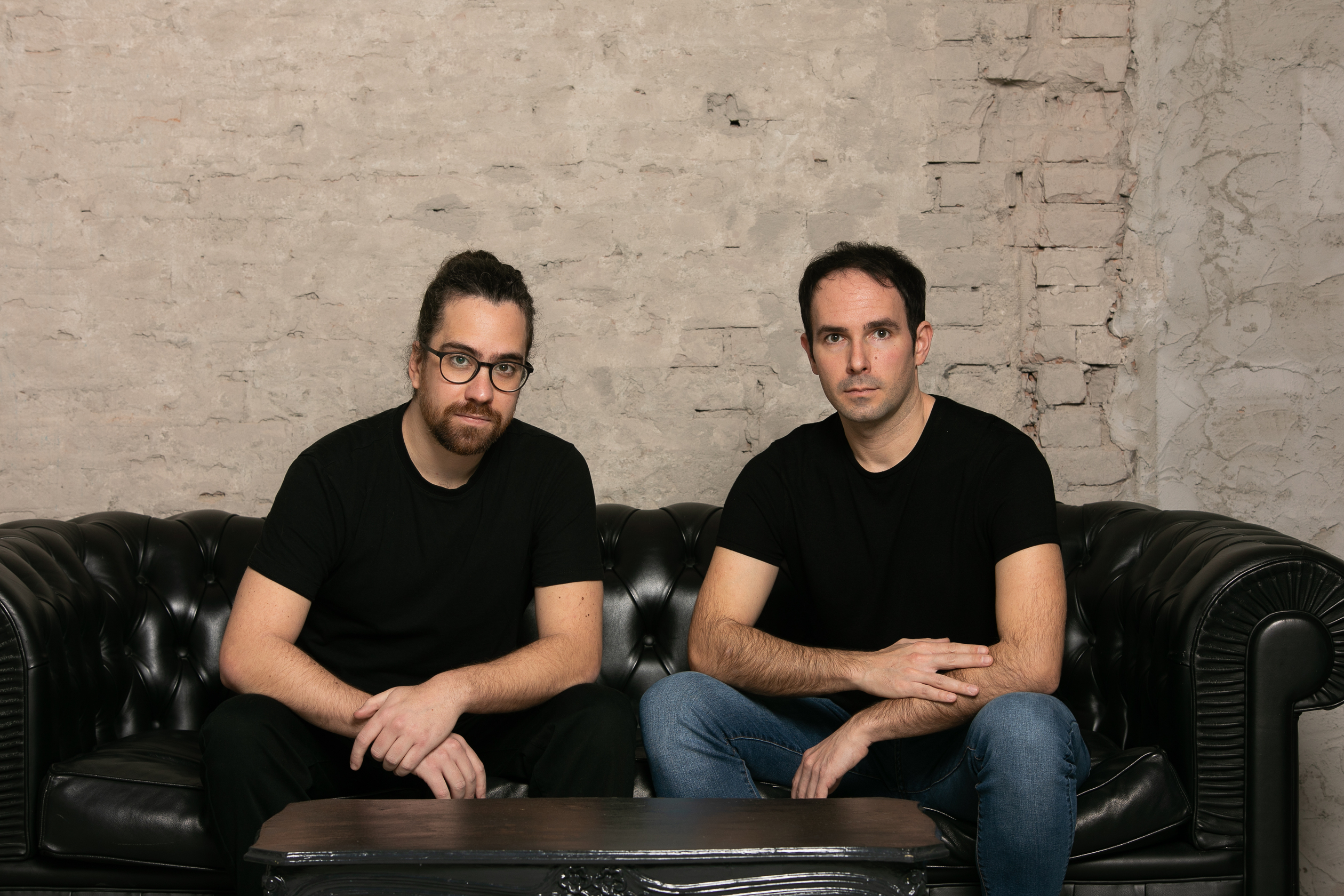
Lorenzo Nargiso, Marcello Violini
TetiAI releases Lucid — the first open-source cognitive protection system for AI, built on 30+ peer-reviewed studies, now available for any AI company to adopt.
DOVER, DE, UNITED STATES, March 19, 2026 /EINPresswire.com/ -- Artificial intelligence is making people more productive — but at a hidden cost. A landmark MIT Media Lab study published in 2025 documented a measurable decline in critical thinking among users who routinely delegate cognitive work to AI systems. The mechanism is straightforward: when a machine reasons on your behalf, your brain stops training itself to do it. Researchers have named this phenomenon cognitive debt — the progressive weakening of cognitive abilities caused by excessive reliance on AI.The risk is especially acute for users under 25. The prefrontal cortex, which governs critical thinking and decision-making, is still developing at that age, making younger users more vulnerable to AI-induced cognitive dependency. The American Psychological Association has already issued specific recommendations on the topic. Scientists have begun referring to the condition as AICICA — AI Chatbot-Induced Cognitive Atrophy — with studies showing that young users develop dependency faster and score lower on critical thinking assessments.
No AI company in the world had addressed this problem — until TetiAI. The company has now launched Lucid, an open-source cognitive protection system, and has already fully integrated it into Teti, its free AI assistant available on Web, iOS, and Android. Teti is the first and only AI assistant in the world with built-in cognitive protection — making it a fundamentally different kind of product from anything currently on the market.
How Lucid Works Inside Teti
When users interact with Teti, Lucid operates silently in the background, monitoring the conversation in real time and dynamically adapting Teti's responses to protect their cognitive abilities. It analyzes every exchange across six dimensions: autonomous reasoning, conceptual understanding, depth of engagement, metacognitive awareness, verification behavior, and motivation. Based on what it detects, it adjusts Teti's behavior accordingly — prompting users who over-delegate to think before receiving an answer, challenging stronger thinkers with harder problems, and suggesting breaks when cognitive fatigue is detected.
Crucially, Lucid distinguishes between healthy and problematic delegation. Asking Teti to format a document or translate a text is fine. Asking it to reason, decide, or analyze on your behalf is not — and that is when Lucid intervenes, steering the conversation toward engagement rather than passive consumption.
For users under 25, Teti enforces stricter safeguards: shorter sessions (30 minutes instead of 45), fewer messages per session (20 instead of 30), and interaction guidelines that always prioritize teaching over solving — not because younger users are less capable, but because the science is clear that the developing brain is more vulnerable.
Science-Based, Open by Design
Lucid's methodology draws from over 30 peer-reviewed publications spanning neuroscience, educational psychology, and cognitive load theory. Its adaptive model operates across four scaffolding levels — from guided step-by-step support to fully autonomous peer-level dialogue — and is grounded in a well-established learning science principle: support should be calibrated to the user's current ability and gradually reduced as competence grows. The system also asks users to attempt problems before receiving answers, since cognitive science shows that self-generated information is retained far more effectively than passively received content.
Its measurement framework is aligned with validated scientific scales tested on thousands of participants, including the Generative AI Dependency Scale and the Collaborative AI Metacognition Scale.
While Teti is already the only assistant in the world offering this level of cognitive protection, TetiAI has made Lucid fully open source — publicly available on GitHub — because, in the company's words, "cognitive protection should exist in every AI product people use regularly, the same way seatbelts exist in every car." Any company can integrate it into their own systems, free of charge. TetiAI will publish real-world implementation results from Teti in the coming months.
About TetiAI
TetiAI was founded in 2025 by Italian entrepreneurs Marcello Violini (CEO) and Lorenzo Nargiso (CTO). Incorporated as a US LLC with operational hubs in Europe and the United States, TetiAI develops human-centric AI built on radical transparency, absolute privacy, and a binding Ethical Charter overseen by an independent Ethics Committee with veto power. The company's stated goal for 2030 is Symbiotic AGI — artificial general intelligence designed as an extension of the human mind, not a replacement.
TetiAI LLC
TetiAI
press@teti.ai
Visit us on social media:
LinkedIn
Legal Disclaimer:
EIN Presswire provides this news content "as is" without warranty of any kind. We do not accept any responsibility or liability for the accuracy, content, images, videos, licenses, completeness, legality, or reliability of the information contained in this article. If you have any complaints or copyright issues related to this article, kindly contact the author above.
